The opening whistle has already blown for advertisers: the best 2026 World Cup commercials so far
From Adidas's five-minute star-studded short film to Michelob ULTRA's lobby farce with Messi and Billy Bob Thornton, the first wave of 2026 FIFA World Cup brand campaigns is already redefining what a tournament commercial looks like. This inaugural roundup covers the standout ads — and the three creative patterns running across all of them.

The 2026 FIFA World Cup — 48 nations, 104 matches, three host countries, an estimated global audience above 6 billion — is shaping up to be the largest advertising stage in history.1 Brands have been betting on that scale since January. With kickoff on June 11, this roundup covers the campaigns that are already setting the creative agenda — plus the emerging trends behind them.
Adidas: three very different bets
Adidas is playing the widest creative game of any brand this cycle, running three distinct campaigns simultaneously.
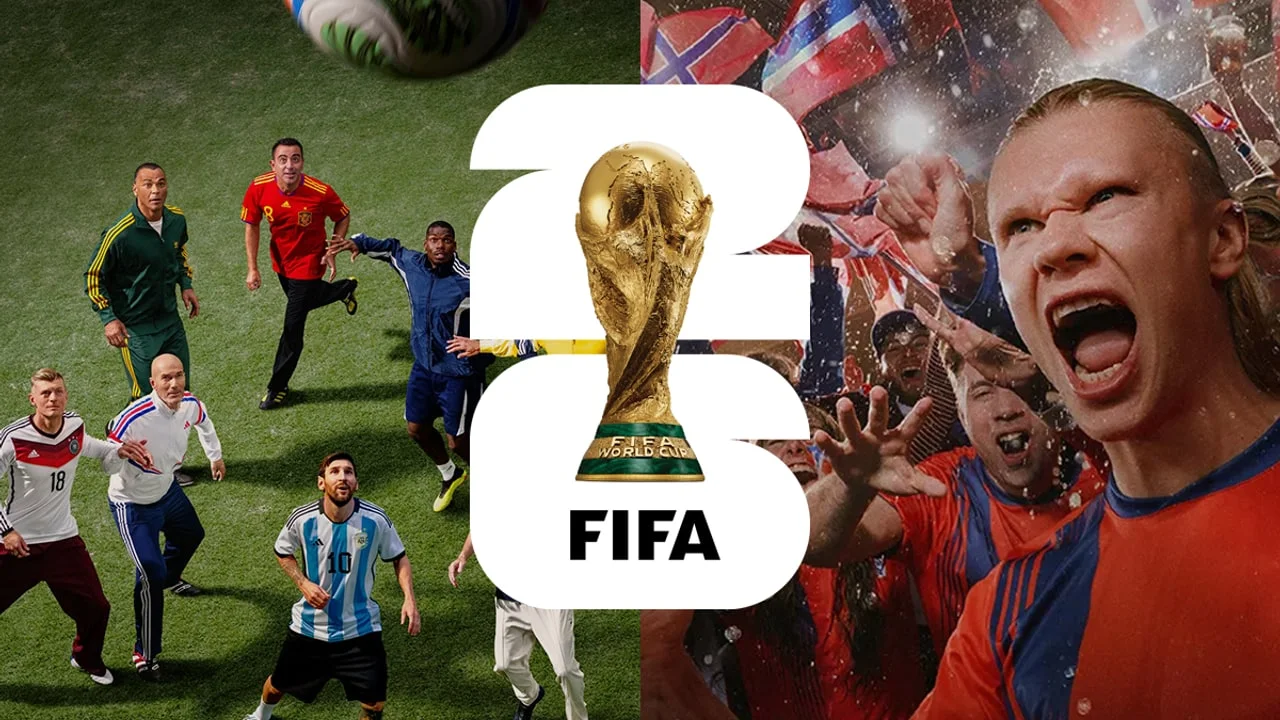
"Backyard Legends" is the one everyone is talking about. A five-minute cinematic short film directed out of Lola New York, it assembles Lionel Messi, Lamine Yamal, Timothée Chalamet, Bad Bunny, Zinedine Zidane, and David Beckham around the simple premise that every great player started in a backyard. The tagline is "You Got This." Within days of release it was being called by commentators "the greatest commercial ever made" — which is hyperbole, but the view counts back up the cultural moment.1
콘텐츠 카드를 불러오는 중…
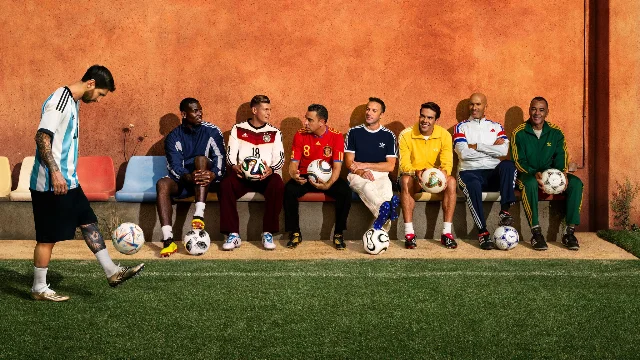
The teaser campaign "Eight Generations of World Cup Greatness" took a more surgical approach: eight legends (Messi, Pogba, Kroos, Xavi, Del Piero, Kaká, Zidane, Cafu) — one per World Cup-winning generation since 1994 — gathered to reveal the official 2026 match ball. Nostalgia marketing executed cleanly: a product launch turned into a history lesson.1
The third move — World Cup Pet Jerseys — is deliberately lightweight. Officially licensed replica kits in Mexico, Argentina, Colombia, and Japan sizing, designed for dogs. No big production, no celebrities: just shareable lifestyle content targeting the growing overlap between football fandom and pet culture.1
Taken together, Adidas is covering nostalgia, cultural star power, and social virality across three separate creative territories rather than betting everything on a single hero film.
Michelob ULTRA and the lobby full of legends
If Adidas "Backyard Legends" is cinematic realism, Michelob ULTRA's "The Superior Match" is pure farce — and it has pulled 1.58 million YouTube views since its May 12 release.2 The premise: inside a hotel lobby, a group of U.S. Soccer players (Pulisic, Dest, Robinson) face off against a group of Argentines (Messi, Martínez, Nico Paz) in a scramble for the last beers. The film also packs in Ronaldo "The Phenomenon," Alex Morgan, goalkeeper Guillermo Ochoa, and Billy Bob Thornton — a casting choice that belongs in its own category.
콘텐츠 카드를 불러오는 중…
As the Official Beer Sponsor of the 2026 tournament, Michelob ULTRA is leaning hard into the host-nation angle, centering U.S. and Latin American players and playing the rivalry for laughs rather than drama. The tone is deliberately different from Budweiser's more earnest "Let It Pour" campaign (featuring Erling Haaland and Jürgen Klopp), which treats the once-every-four-years emotional intensity of the tournament as sacred.1
Coca-Cola's three-film strategy
Coca-Cola arrived earliest. "Bubbling Up", released January 30, opened the campaign with a new brand anthem: a reimagining of Van Halen's "Jump" performed by J Balvin, Amber Mark, Steve Vai, and Travis Barker.3 It announced the emotional territory — football highs and lows, Coke as the constant — but held back the full campaign.
콘텐츠 카드를 불러오는 중…
The follow-up, "Uncanned Emotions", narrated by Peter Drury and commentator Luis Omar Tapia with cameos from José Mourinho and J Balvin, landed in April.4 CreativeBloq noted the campaign breaks from the trend of using big-name footballers front and center, leaning instead on emotional storytelling and voice work.5 A third film is scheduled. The three-chapter rollout is a deliberate attempt to build mounting anticipation across several months rather than spending the entire awareness budget in a single pre-tournament drop.
Lay's: the "No Lay's, No Game" offensive
As Official Snack of FIFA World Cup 2026, Lay's is running its "Bandwagon" campaign with a lineup that reads like a talk-show booking sheet: Messi, David Beckham, Thierry Henry, and Steve Carell.6 The longform version runs over two minutes and leans into the idea of unlikely fans latching onto teams once a tournament is underway.
콘텐츠 카드를 불러오는 중…
The Steve Carell cameo is the signal: Lay's isn't targeting football purists, it's targeting the casual American viewer who tunes in because the World Cup is coming to their city. The "No Lay's, No Game" tagline is blunt product-occasion messaging underneath the celebrity layer.
The campaigns worth watching for what they're trying
Beyond the big-budget hero films, several campaigns are doing something more structurally interesting.
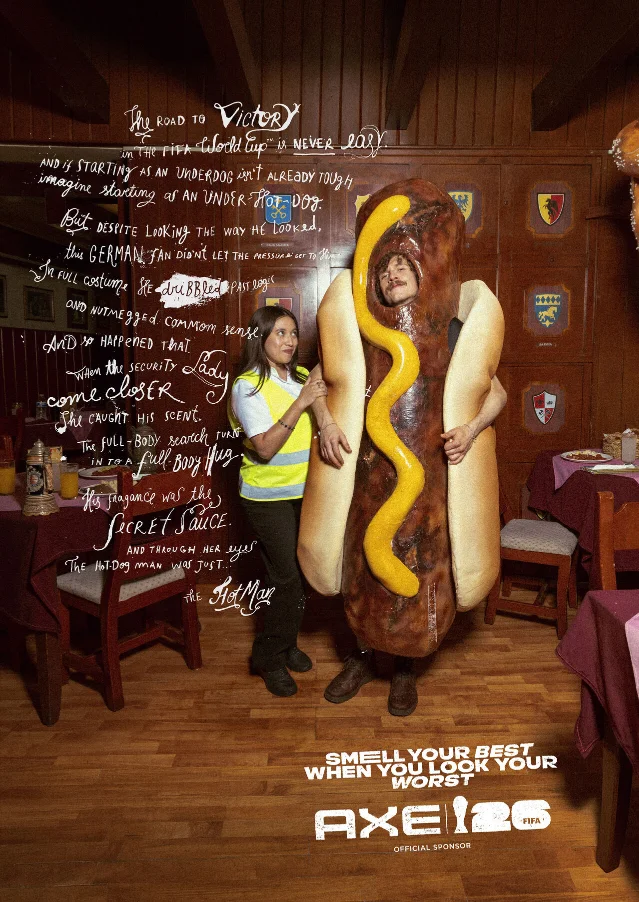
AXE / Lynx — "Smell Your Best When You Look Your Worst" (Lola, Madrid) takes the classic AXE seduction formula and turns it on fan culture. A Germany fan shows up in a giant sausage suit. An Argentine fan recreates the Hand of God. A Brazil fan dresses as a human violin section. The joke is that football makes fans do ridiculous things — and AXE is the product that keeps them attractive through all of it. It's one of the few campaigns this cycle that finds a specific, defensible truth about the tournament rather than vague emotional uplift.1
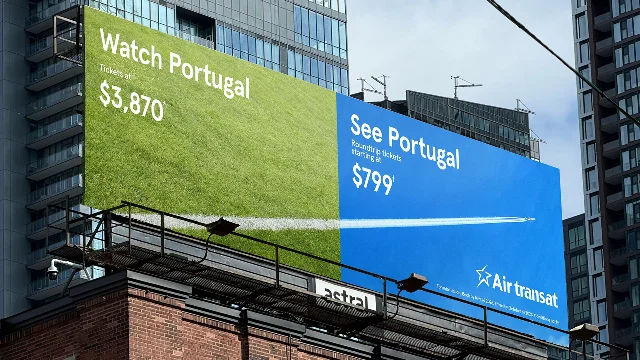
Air Transat — "Watch / See" (Courage, Montreal) is a non-sponsor that turned ticket-price outrage into a media moment. Side-by-side print ads compare the eye-watering cost of 2026 match tickets to the comparatively cheap Air Transat flight to the same country. "Watch Portugal" vs. "See Portugal." The insight is that most fans who care about the tournament can't afford to attend — so come see the country instead.1 It's the cleanest piece of ambush marketing in the field so far.
Canada Soccer — "The Jersey Swap" ran activations in Toronto's Little Italy, offering Italy fans (whose national team failed to qualify) a free Canada jersey in exchange for their Azzurri kit. The federation's stated position: "Soccer is no longer imported culture in Canada, it's Canadian culture." Whether that's true in 2026 is a legitimate question, but it's a sharper brief than most national association campaigns manage.1
Betano (Wieden+Kennedy São Paulo) told an unusually quiet story: a small digital football character escapes from a video game and makes its way to a live World Cup match. Built around the line "The World Cup begins when you believe," it uses the virtual-to-real crossover as a metaphor for modern fandom migrating from screens to shared physical experience. It's the W+K brief at its most stripped-back.1
Volkswagen Brasil — "O Sonho" (The Dream) is the outlier: a two-minute Brazilian campaign from VW's local arm that has quietly accumulated over 46 million YouTube views.7 No major international celebrities, no English-language crossover play. Just Brazilian football passion at scale.
Three patterns running across the field
After surveying the campaigns released so far, three things are consistently true:
Hero films are now short cinema, not broadcast spots. Adidas ran five minutes. Michelob ULTRA ran three. Lay's ran over two. These aren't 30-second cutdowns with a long version somewhere online — the long-form is the primary creative. The platform distribution has changed what "a TV commercial" means.1
Messi and Beckham are the default casting. Both appear in multiple campaigns from different brands. Messi features in Adidas, Michelob ULTRA, and Lay's. Beckham is in Adidas and Lay's. The upside is obvious — both are global faces with 30 years of World Cup cultural weight. The risk is that by mid-tournament, audiences may start tuning out the familiar faces.1
The best creative is finding a specific truth, not a universal one. AXE's fan costumes, Air Transat's ticket price arbitrage, Canada Soccer's identity recruitment — these are all built on concrete observations about this specific tournament in this specific moment, rather than generic "football unites the world" sentiment. The campaigns that lean on the latter tend to look similar to each other.
Next issue: we'll cover Burberry's "A Good Sport" and the Brahma/Ancelotti/Ronaldo campaign in full, plus any new drops as the tournament opens on June 11.
Source playlist: All the 2026 World Cup Commercials on YouTube · Coverage via LLLLITL, Adweek, CreativeBloq, Brand Innovators
참고 출처
- 1LLLLITL: World Cup 2026 — Watch the 24 Greatest Ads
- 2YouTube: Michelob ULTRA — The Superior Match
- 3YouTube: Coca-Cola Bubbling Up
- 4YouTube: Coca-Cola Uncanned Emotions
- 5CreativeBloq: The good, the bad and the AI of World Cup 2026 adverts
- 6Brand Innovators: FIFA World Cup Ad Tracker 2026
- 7YouTube: VW Brasil O Sonho
이 콘텐츠를 둘러싼 관점이나 맥락을 계속 보강해 보세요.